Introduction: The Lightweight Revolution in Modern Robotics
In the rapidly evolving domain of industrial automation, human-robot collaboration (cobots), and humanoid robotics, engineering agility hinges on a critical factor: the strength-to-weight ratio. Traditional robotic components rely heavily on metallic structures like aluminum or steel for structural linkages and joints. However, the sheer mass of metals introduces substantial rotational inertia, higher motor power demands, increased energy consumption, and limits cycle velocity.
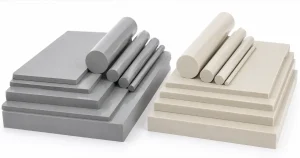
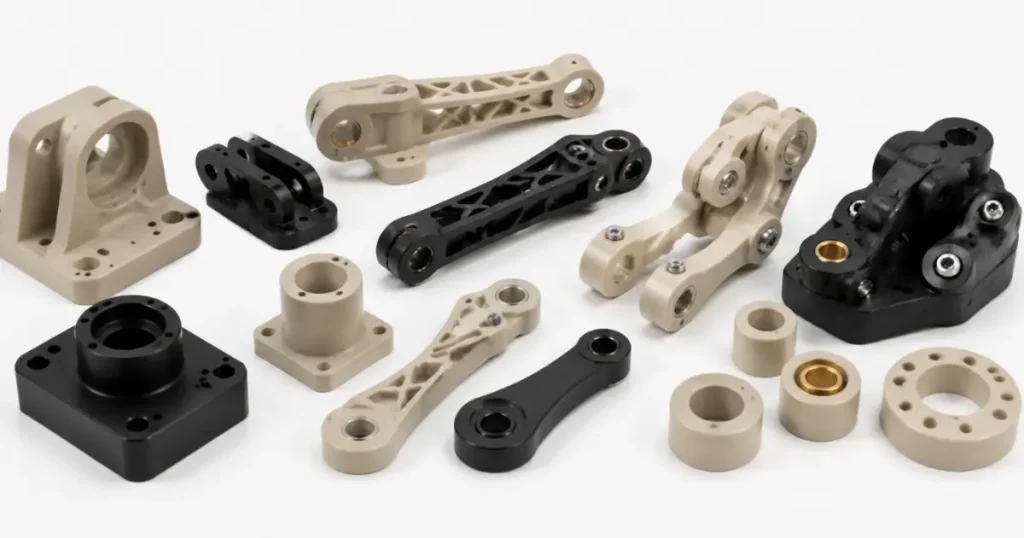
To overcome these kinetic bottlenecks, top-tier automation engineers are shifting towards advanced engineering polymer alternatives. High-precision, non-standard plastic structural components are transforming how modern robotic linkages and joints are configured. By leveraging specialized polymers such as PEEK, PPS, Nylon, and PC+ABS blends, manufacturers can achieve dramatic weight reductions without compromising structural rigidity or dimensional tolerance.
Why Lightweight Plastic Components in Robotics Matter
Implementing high-performance polymers directly impacts the dynamic throughput of automation machinery. Here is how modern materials drive optimization:
- Mitigating Inertia & Power Demands: Reducing the deadweight of moving arm linkages allows motors to decelerate and accelerate exponentially faster. This optimizes cycle times while allowing system integrators to size down actuators and servo drives, saving massive hardware costs.
- Tribological Superiority: Many advanced plastics exhibit excellent self-lubricating characteristics, which minimizes stick-slip effects and frictional wear in articulated robotic joints.
- Corrosion Resistance & Chemical Inertia: Unlike metals, advanced polymers do not degrade or rust when exposed to extreme operational environments, cleaning chemicals, or moisture.
Comparative Technical Analysis of Robotics-Grade Polymers
Different sections of a robot demand distinct physical properties. A high-speed multi-axis articulated arm requires stiff linkages, whereas compact internal gears require fatigue endurance. Below is a comprehensive comparison of premium polymers engineered by Quanda for non-standard robotic infrastructure:
| Material Selection | Key Engineering Advantages | Tensile Strength (MPa) | Thermal Deflection Temp (HDT @1.8 MPa) | Primary Robotic Application Areas |
|---|---|---|---|---|
| Sufoner® PEEK | Extreme modulus, unparalleled fatigue life, ultra-high strength-to-weight ratio, chemical inertia. | 95 – 110 | 150°C – 310°C (Filled grades) | High-load articulated arm linkages, dynamic non-standard structural joint brackets, heavy-duty drive gears. |
| Sufoner® PPS | Exceptional dimensional stability, inherent self-lubrication, zero moisture absorption, superb thermal envelope. | 70 – 85 | 220°C – 260°C | Articulated rotary joint housings, precision multi-pin connectors, sensor mountings, sliding sleeve bearings. |
| Recalon® PA6/66 | Excellent impact damping, high mechanical vibration absorption, superior wear resistance, cost-efficient processing. | 75 – 90 | 65°C – 180°C | End-of-arm tooling (EOAT) grippers, structural cable guides, protective wear pads, low-load structural links. |
| Benlonate® PC+ABS 30% | High impact resistance at low temperatures, low shrinkage rates, rigidity combined with aesthetic finish capabilities. | 55 – 70 | 110°C – 130°C | Robotic exoskeleton chassis covers, internal electronics enclosures, non-loadbearing articulated shrouds. |
Engineering Focus: Custom Non-Standard Component Fabrication
Industrial robots rarely utilize generic off-the-shelf structural elements. Complex multi-axis kinematics require highly bespoke, non-standard components tailored to exact spatial and weight constraints. At Quanda, we translate intricate 3D CAD geometries into functional reality through state-of-the-art precision CNC plastic machining and profile extrusion processes.
By eliminating internal stresses during specialized annealing phases, our non-standard components maintain exceptionally tight machining tolerances (down to ±0.02mm), ensuring that your robotic linkages line up flawlessly with planetary gearboxes, encoders, and brushless motors.
Frequently Asked Questions (FAQ)
Q1: Can custom engineering plastics genuinely replace aluminum in structural robot linkages?
A: Absolutely. Polymers like Sufoner® PEEK offer a unique specific strength that matches or beats structural metals like aluminum, while yielding up to a 50% decrease in total component weight. This allows for faster acceleration and less mechanical stress on the servo motors.
Q2: How do engineering plastics behave over millions of continuous robotic joint cycles?
A: Advanced polymers possess incredible fatigue endurance. Sufoner® PPS and premium Nylons exhibit internal damping properties that dissipate mechanical vibrations, drastically lowering micro-crack propagation under repetitive reciprocating forces compared to cyclical metals, which are prone to metal fatigue.
Q3: What parameters are required to get a quote for a non-standard custom plastic robot joint?
A: Quanda handles customized fabrication from start to finish. All we require are your 3D engineering designs (STEP, IGES, or SolidWorks files) alongside your explicit environmental specifications (such as operational temperatures, chemical exposure profiles, and load limits). Our engineering team will assist in choosing the ideal polymer grade for your needs.
Conclusion: Optimize Your Robotics Architecture with Quanda
The strategic deployment of high-performance plastic components in robotics is no longer just a design trend—it is a mandatory step toward achieving maximum system efficiency, high payloads, and rapid positioning accuracy. Whether you need custom PEEK linkages or tough PC+ABS casings, Quanda provides full-scale manufacturing expertise for all your non-standard industrial demands.
Ready to minimize structural mass and elevate your robotic efficiency? Contact our technical engineering department today for custom consultation and quick turnaround component pricing.
Discover more or submit a drawing for review: Contact Quanda’s Engineering Team