In modern industrial manufacturing and precision engineering, joining high-performance plastics is a frequent design requirement. However, when it comes to plastic bonding for PTFE (Polytetrafluoroethylene) and POM (Polyoxymethylene/Acetal), engineers and manufacturers often run into significant roadblocks. Both materials are notorious for their low surface energy, which makes them highly resistant to standard chemical bonding.
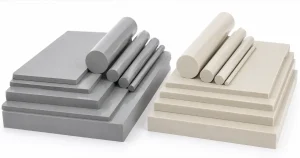
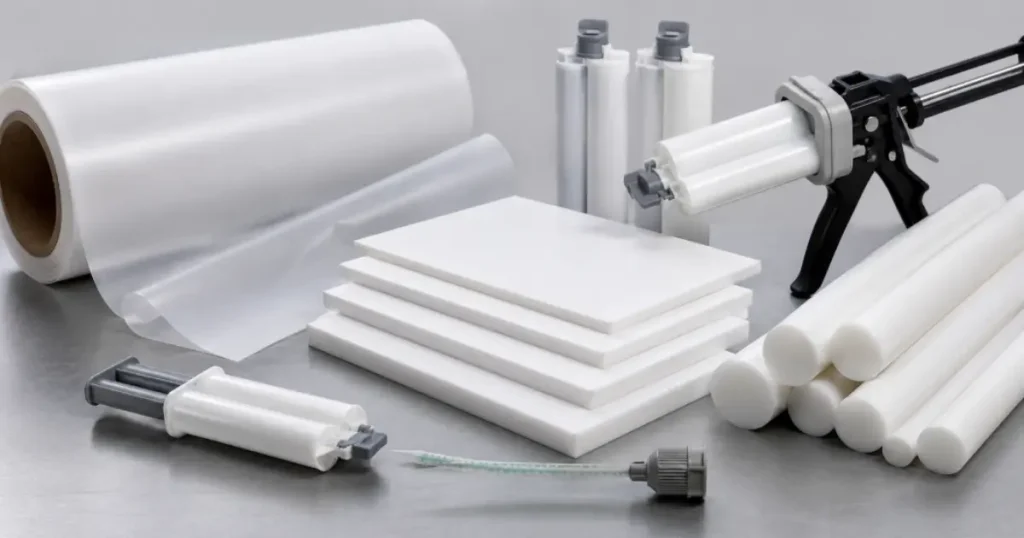
Whether you are using PTFE Film for chemical-resistant linings, structural Saferlon® PTFE Sheet & Rod, or high-rigidity Qunsail® POM Sheet & Rod for precision gears, choosing the right adhesive system and surface treatment is critical to ensuring long-term mechanical reliability.
Why Are PTFE and POM Hard to Bond?
To understand how to bond PTFE and POM, we must first understand their inherent physical properties. The primary metric for determining bondability is surface energy (measured in mN/m or dynes/cm). For an adhesive to wet a surface effectively, the surface energy of the plastic should be higher than the surface tension of the liquid adhesive.
- PTFE (Surface Energy ~18 mN/m): Possesses one of the lowest surface energies of any solid material. Its carbon-fluorine bonds are extremely stable, creating a completely inert, non-stick surface.
- POM (Surface Energy ~36 mN/m): While slightly higher than PTFE, POM features a highly crystalline structural composition with excellent chemical solvent resistance, which prevents adhesives from swelling or biting into the substrate.
Without proper preparation, conventional adhesives will simply bead up on these materials, resulting in a joint with zero shear strength.
Best Adhesives and Primers for PTFE and POM Bonding
Depending on your load requirements, environmental exposures, and production throughput, several industrial adhesive classes can successfully bond these materials:
1. Cyanoacrylates (Super Glues) with Specialized Primers
For quick assembly and light-to-medium mechanical loads, ethyl cyanoacrylates combined with a specialized polyolefin primer (such as Loctite 770) yield outstanding results. The primer alters the surface energy momentarily, allowing the super glue to form a strong interpolymer network with the plastic.
2. Specialized Acrylic Adhesives (Structural Olefin Adhesives)
Modern structural acrylics formulated specifically for low-surface-energy (LSE) plastics can bond POM directly without primers. These adhesives contain specialized monomers that can physically disrupt the crystalline surface structure of engineering plastics.
3. Modified Epoxies
Standard epoxies do not adhere well to untreated PTFE or POM. However, if the plastics undergo professional surface modification (such as chemical etching or plasma treatment), high-performance flexible epoxies provide unparalleled chemical resistance and shear strength under harsh operational temperatures.
Technical Comparison of Adhesive Options
The following table highlights the technical differences when bonding engineering plastics like Saferlon® PTFE and Qunsail® POM:
| Adhesive Type | Surface Treatment Required | Bond Strength (POM) | Bond Strength (PTFE) | Temperature Limits | Best Applications |
|---|---|---|---|---|---|
| Cyanoacrylate + Primer | LSE Primer required | High | Medium | -50°C to +80°C | Rapid prototyping, small seals, electronics |
| Structural Acrylic (LSE) | None (or light abrasion) | Very High | Medium-Low | -40°C to +120°C | Structural POM housings, mechanical assemblies |
| Flexible Epoxy | Chemical Etching / Plasma | High | High (with etching) | -60°C to +180°C | Heavy industrial components, aerospace liners |
Crucial Step-by-Step Preparation Protocol
Regardless of the adhesive type chosen, adherence to a rigorous preparation protocol is mandatory to maximize structural integrity:
- Degreasing: Thoroughly clean the plastic surfaces using Isopropyl Alcohol (IPA) or Acetone to eliminate any machine oils or plasticizer residues.
- Surface Abrasion (Optional but Recommended for POM): Lightly sand the surface with a fine grit (120-240) sandpaper to boost mechanical interlocking mechanisms. Dust off thoroughly after sanding.
- Chemical Etching (For PTFE Film & Sheets): Unpigmented PTFE requires sodium-naphthalene etching solutions to strip fluorine atoms away from the surface layer, replacing them with hydroxyl/carbonyl groups receptive to adhesives.
- Primer Application: Apply a thin uniform layer of your polyolefin primer to both sides and let it flash dry completely for 30–60 seconds before applying the adhesive.
Frequently Asked Questions (FAQ)
Can I glue POM (Acetal) directly to metal?
Yes. Specialized structural acrylic adhesives optimized for Low Surface Energy (LSE) plastics can successfully bond Qunsail® POM directly to sandblasted steel or aluminum without primers. Ensure proper surface degreasing before application.
Is chemical etching mandatory for bonding Saferlon® PTFE?
For high-load structural applications or high-vibration environments, chemical etching is highly recommended as it creates the strongest chemical link possible. For light, non-structural positioning, a high-performance primer alongside a cyanoacrylate can suffice.
Does hot melting work for joining PTFE and POM?
PTFE does not melt like conventional thermoplastics due to its extremely high melt viscosity; it cannot be hot-melted. POM can be welded ultrasonically or via spin welding to itself, but it cannot be hot-melted effectively directly onto a PTFE surface.
Conclusion & Custom Engineering Solutions
Successfully bonding PTFE and POM requires a deliberate alignment of chemical primers, surface activation treatments, and specific adhesive compounds. Choosing between materials like high-durability Saferlon® PTFE and precision-grade Qunsail® POM depends closely on your end-use application parameters.
Are you tackling a challenging engineering layout involving low-surface-energy plastics? Contact our materials experts today for tailored solutions, customized material dimensions, and technical assistance.