In the world of precision manufacturing, CNC machining is only half the battle. For engineering plastics, the true differentiator lies in the post-processing phase. Achieving a flawless, high-gloss surface finish while ensuring structural integrity requires a masterful combination of plastic polishing and deburring.
Whether you are manufacturing optical components, medical devices, or high-strength fasteners like non-standard plastic screws, eliminating surface imperfections and machining marks is critical. In this comprehensive guide, we explore the industry-leading techniques used to achieve premium surface finishes on custom plastic parts.
Why Deburring and Polishing Matter for Non-Standard Plastic Parts
During CNC milling, turning, or routing, cutting tools inevitably leave behind micro-burrs (raised edges or small fragments of material) and tool paths. If left unaddressed, these defects can compromise both form and function:
- Aesthetics: Rough surfaces ruin transparency in clear plastics (like PMMA or PC) and look unprofessional.
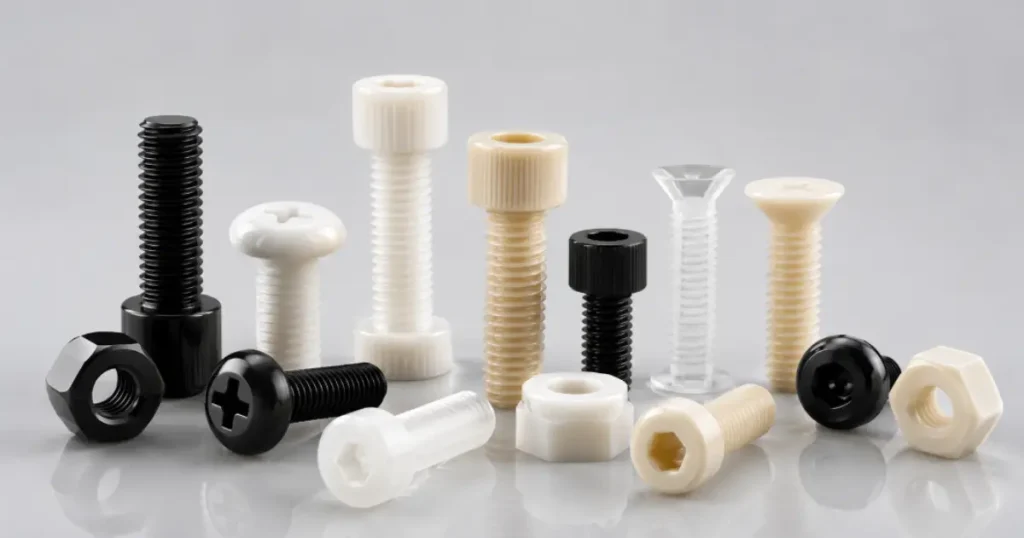
- Mechanical Function: Burrs on threaded components like plastic screws can cause cross-threading, incorrect torque application, or assembly failure.
- Stress Concentration: Micro-cracks and burrs act as stress concentration points, reducing the fatigue life of the plastic component under mechanical load.
Advanced Plastic Deburring Techniques
Deburring is the critical first step before any polishing can begin. Depending on the plastic polymer grade and component geometry, manufacturers utilize several specialized methods:
1. Manual Precision Deburring
Using specialized micro-blades, scrapers, and brushes, skilled technicians meticulously remove burrs from intricate areas. This is highly effective for low-volume, highly complex non-standard custom parts.
2. Cryogenic Deburring
For high-volume production, parts are placed in a chamber with liquid nitrogen. The ultra-thin burrs freeze rapidly and become brittle. The chamber is then agitated or blasted with media, cleanly snapping off the burrs without affecting the main body of the plastic component.
3. Mechanical Tumbling (Barrel Finishing)
Parts are tumbled with specialized abrasive media (ceramic, plastic, or walnut shells) and compounding agents to smooth out rough edges across the entire surface batch.
Advanced Plastic Polishing Methods for a High-Gloss Finish
Once the burrs are removed, polishing transitions the plastic surface from a matte or machined state to a brilliant, high-gloss, or optically clear finish. Here are the primary techniques deployed based on the material properties:
1. Vapor Polishing
Vapor polishing uses a chemical solvent gas (such as Weld-On 4 or methylene chloride) to slightly melt the surface molecules of the plastic. As the solvent evaporates, the plastic resolidifies into a perfectly smooth, high-gloss, and optically transparent surface. It is exceptionally well-suited for polycarbonate (PC) and acrylic (PMMA).
2. Flame Polishing
By briefly exposing the plastic edge to a precise, high-temperature oxygen-hydrogen flame, the surface layer melts and flows into a glossy finish due to surface tension. This method is fast and cost-effective for acrylic signs and thick-walled sheet fabrications.
3. Mechanical and Buffing Wheel Polishing
Utilizing rotating cloth wheels coated with ultra-fine abrasive polishing pastes, technicians gently buff the plastic components. This multi-stage process yields a mirror-like finish on materials ranging from Nylon (PA6/66), PEEK, to POM (Acetal).
Technical Comparison: Finishing Methods Across Common Engineering Plastics
Not all plastics respond equally to every finishing method. Choosing the wrong combination can lead to chemical stress cracking, discoloration, or dimensional distortion. The table below outlines optimal pairings for non-standard parts:
| Plastic Material | Recommended Deburring | Best Polishing Method | Surface Result | Typical Application |
|---|---|---|---|---|
| Acrylic (PMMA) | Manual Scraping | Vapor / Flame / Buffing | Optically Clear & High-Gloss | Lenses, Light Guides, Displays |
| Polycarbonate (PC) | Manual / Cryogenic | Vapor Polishing | High Transparency & Brilliance | Medical Manifolds, Viewports |
| POM (Acetal / Delrin) | Mechanical Tumbling | Mechanical Buffing | Smooth Matte to Semi-Gloss | Gears, Precision Bushings |
| Nylon (PA6 / PEEK) | Cryogenic / Manual | Fine Buffing Compound | Low Friction, Sleek Semi-Gloss | Custom Plastic Screws, Aerospace Parts |
Frequently Asked Questions (FAQ)
Q1: Does polishing alter the critical tolerances of custom CNC plastic parts?
A: When done correctly, high-precision finishing methods like vapor polishing or light mechanical buffing only affect the surface layer at a micron level (typically less than 0.01mm). However, for extremely tight tolerance non-standard products, the machining dimensions must account for the finishing offset.
Q2: Why can’t you flame-polish engineering plastics like PEEK or POM?
A: Flame polishing relies on the thermal properties of amorphous plastics like acrylic. Crystalline or semi-crystalline engineering plastics like PEEK, POM, and Nylon will burn, discolor, or degrade structural integrity when exposed directly to an open flame.
Q3: How do you ensure threads on custom plastic screws remain functional after deburring?
A: Precision components like custom plastic screws require delicate treatment. Micro-deburring using manual tools or precisely timed cryogenic deburring ensures that the screw threads are completely cleared of micro-burrs without dulling or altering the thread pitch profile.
Partner with Quanda Plastic for Flawless Non-Standard Components
Achieving a balance between a high-gloss aesthetic and stringent technical dimensions requires deep engineering expertise. At Quanda Plastic, we provide end-to-end CNC machining, precise deburring, and customized surface polishing services for a diverse array of non-standard industrial components.
Ready to elevate your next project? Get in touch with our engineering team today through our Contact Page to receive a rapid quote and technical manufacturing assessment.