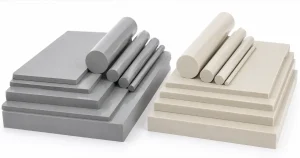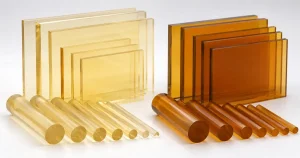
Enhancing Grid Reliability and Mechanical Endurance with Precision-Machined Recalon® PA6/66 Engineered Plastics.
The Evolution of Electrical Grid Insulation Materials
In modern power transmission and distribution systems, heavy-duty components are subjected to extreme electrical voltage stresses and harsh outdoor environments. Traditional materials like porcelain and heavy metals often suffer from critical vulnerabilities, including fragility, excessive weight, and susceptibility to environmental degradation. To resolve these engineering bottlenecks, the global electrical utility infrastructure has pivoted toward high-performance polymers.
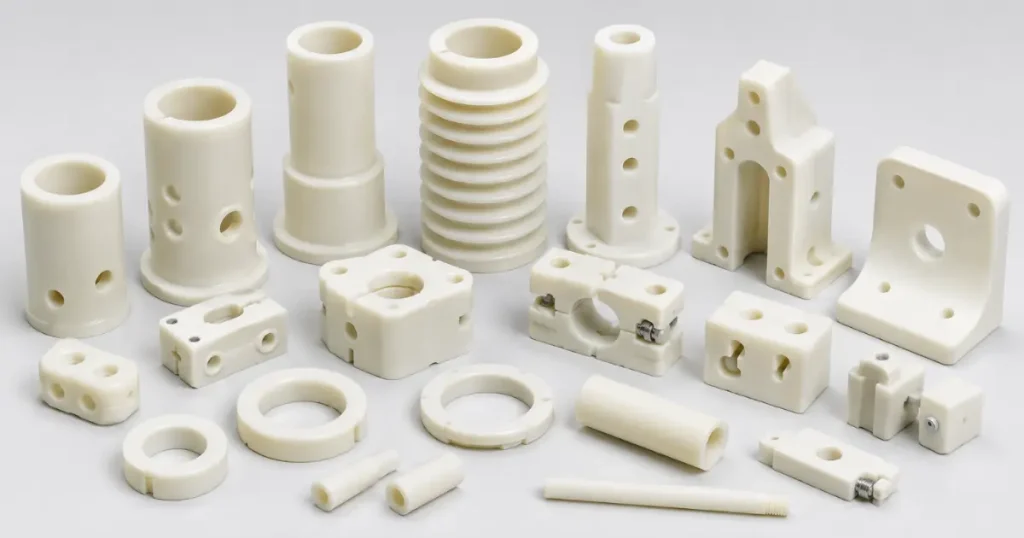
Among these, Recalon® PA6/66 stands out as an elite grade of polyamide (nylon) developed specifically to satisfy both structural rigidity and high dielectric requirements. This article explores how custom-machined Recalon® PA6/66 parts are revolutionizing high-voltage insulators, structural wire clamps, and intricate load tap changer (LTC) components.
1. High-Voltage Insulators: Dielectric Breakthroughs
High-voltage insulators must withstand immense electrical fields without catastrophic breakdown. Recalon® PA6/66 features a robust molecular structure that provides outstanding dielectric strength, ensuring excellent surface tracking resistance and minimal leakage current.
When used in sub-station spacers, isolation bushings, or core insulating bars, custom-machined Recalon® PA6/66 components eliminate the risk of brittle fractures common in ceramic variants. Its low thermal expansion coefficient guarantees structural stability across fluctuating operating temperatures, ensuring uninterrupted electrical delivery.
2. Structural Cable and Wire Clamps: High-Load Mechanical Performance
Transmission line clamps and cleats hold high-voltage cables secure against gravitational pull, wind-induced vibrations, and short-circuit electromagnetic forces. Metals require additional insulation sleeves, while generic plastics lack the mechanical stamina.
Recalon® PA6/66 delivers an ideal balance of mechanical attributes:
- High Tensile & Compressive Strength: Prevents distortion under continuous clamping torque.
- Vibration Damping: Effectively absorbs cyclical mechanical stresses, protecting aluminum and copper conductors from micro-damage.
- Corrosion Resistance: Completely immune to industrial pollutants, marine salt air, and chemical exposure.
3. Load Tap Changer (LTC) Components: Wear and Insulation Mastery
The load tap changer is the heart of a power transformer, regulating output voltage by varying the transformer’s turn ratio. Because it operates under continuous mechanical friction while submerged in transformer oil, its drive gears, selector shafts, and insulating structural panels must be flawlessly resilient.
Machined parts made from Recalon® PA6/66 offer exceptional fatigue resistance and an ultra-low coefficient of friction. This self-lubricating profile drastically reduces mechanical wear within the tap changer assembly, extending routine maintenance intervals and optimizing long-term grid operational safety.
Technical Specification & Comparison Table
To assist power utility engineers in material selection, the table below benchmarks Recalon® PA6/66 against industry alternatives for high-voltage and structural transmission hardware:
| Technical Property | Recalon® PA6/66 (Nylon) | Standard Polyacetal (POM) | Industrial Porcelain / Ceramic |
|---|---|---|---|
| Dielectric Strength (kV/mm) | 22 – 28 | 20 – 23 | 15 – 20 |
| Tensile Strength at Yield (MPa) | 83 (High Mech Strength) | 65 | 45 (Brittle) |
| Impact Resistance | Excellent (No notch failure) | Good | Extremely Poor |
| Weight Reduction Benefit | Very High (Lightweight) | High | None (Heavy weight load) |
| Machining Flexibility | Excellent for Non-Standard parts | Excellent | Extremely difficult / Requires molding |
Custom Machining and OEM for Non-Standard Utility Parts
At Quanda Plastic, we recognize that no two power grid configurations are identical. High-voltage sub-stations and transformer assemblies heavily depend on non-standard, custom-tailored geometries. Utilizing state-of-the-art CNC turning, milling, and routing centers, we specialize in manufacturing custom Recalon® PA6/66 components tailored precisely to your CAD blueprints and engineering drawings. From specific tracking-resistant profile insulators to complex multi-tooth tap changer gears, our strict quality control ensures tolerances are maintained to the micron level.
Frequently Asked Questions (FAQ)
Q1: Can Recalon® PA6/66 be continuously submerged in transformer oil?
A: Yes. Recalon® PA6/66 displays superior chemical compatibility with traditional mineral transformer oils and synthetic ester fluids. It retains its full mechanical integrity and dielectric parameters without chemical degradation or swelling over decades of continuous exposure.
Q2: Why choose Recalon® PA6/66 over metal for high-voltage cable clamps?
A: Unlike metal clamps, Recalon® PA6/66 provides inherent electrical insulation, eliminating the requirement for separate rubber or composite liners. Additionally, it prevents eddy current losses induced by alternating magnetic fields surrounding high-voltage power lines.
Q3: How does Quanda Plastic ensure the precision of non-standard engineering parts?
A: We utilize advanced multi-axis CNC machining centers calibrated specifically for engineering plastics. Internal stresses are mitigated during the blanks stage to avoid post-machining warping, guaranteeing strict adherence to industrial grid drawings.